
Chromatic shadow mixing
How to darken acrylic paint without using black
Black is useful, but it is not the only route to a lower value. A related dark pigment or a controlled complementary mixture can deepen acrylic color while keeping the shadow connected to the rest of the painting. The right choice depends on whether the target must become darker, quieter, cooler or warmer.
Start here
The short answer
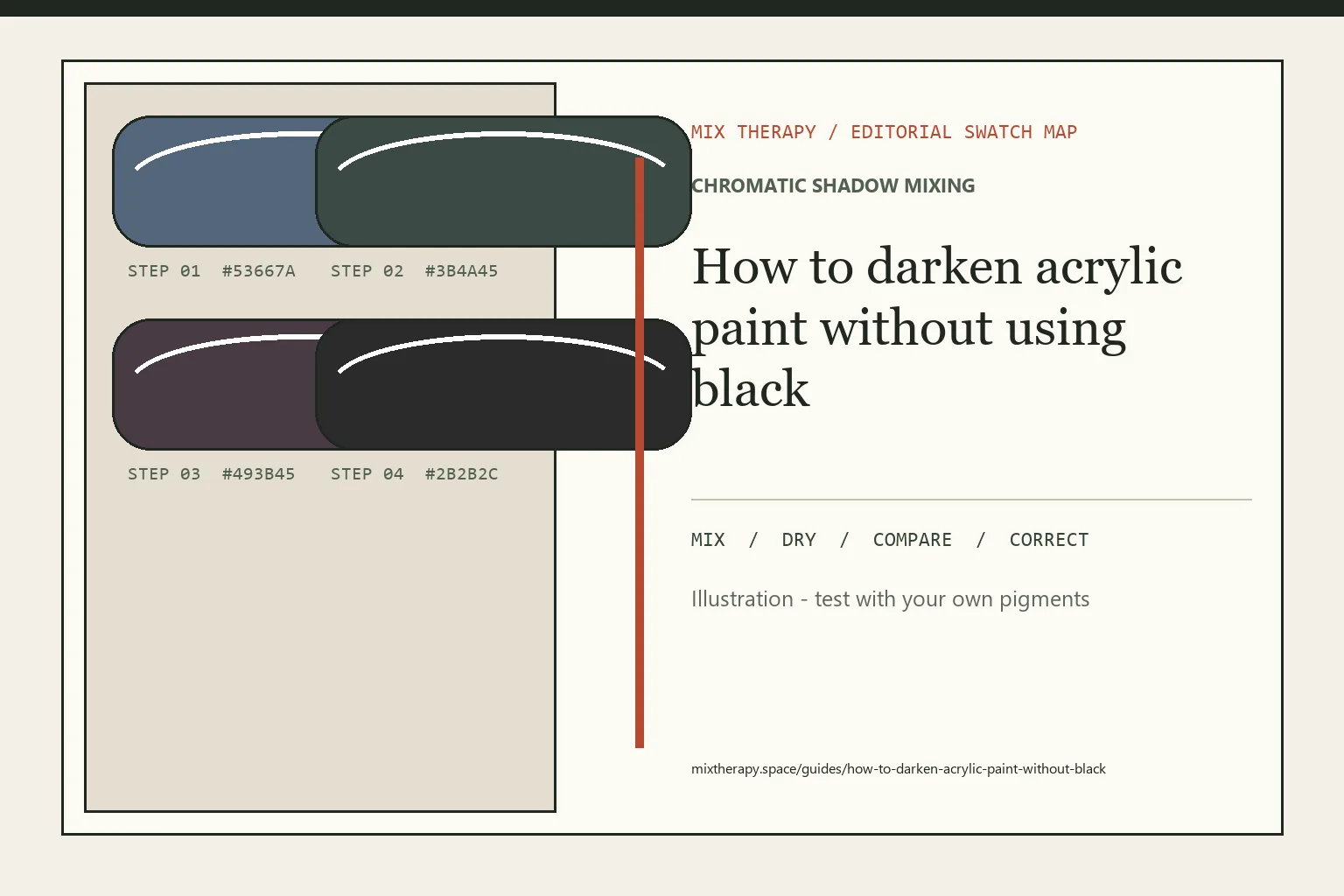
To darken acrylic paint without black, add a darker pigment that already belongs to the color family or mix a chromatic dark from complementary colors. Ultramarine with burnt umber is a flexible starting dark, but it should be added to the local color gradually. Check a thin drawdown and a dry swatch after every meaningful change so the color does not become neutral before it reaches the needed value.
Four shadow routes
Choose a dark that preserves the color family
Lowering value and lowering chroma are separate decisions. Use the smallest addition that solves the visible problem.
| Color family | Useful darkening route | Watch for |
|---|---|---|
| Blue | Ultramarine plus a measured warm earth | A brown or neutral thin edge. |
| Green | Deeper blue plus a restrained red-earth neutral | A dead gray-green. |
| Red or orange | Deep red, violet or a trace of cool complement | Sudden brown or purple bias. |
| Earth neutral | Ultramarine and the existing earth color | A dark disconnected from the local hue. |
Pigment strength, transparency and undertone vary by brand. Treat every route as a starting test and record the exact tubes that produced the useful dry result.
01
Separate darker from duller before adding paint
Compare the target and the current mixture in grayscale first. If their values already match, the problem may be excess chroma rather than insufficient darkness. Adding a dark pigment in that situation can make the passage heavy while leaving the real relationship unresolved.
Next describe the temperature and hue direction that must remain visible. A dark blue shadow, a muted green shadow and a warm brown shadow can share the same value without sharing the same mixture. Write one short instruction such as darker and cooler or darker but still red. That instruction gives the next addition a clear job.
02
Build a chromatic dark from two known pigments
A complementary pair can approach black because each color reduces the chroma of the other. Ultramarine and burnt umber are a practical blue-earth pair; a deep red and phthalo green can make a strong transparent dark. Mix the pair separately before introducing it into the local color so its undertone is visible and controllable.
Start with the weaker pigment and add the stronger one in small increments. Equal-looking blobs are not equal in tinting strength. Spread a thin edge and make a tiny tint with white to reveal whether the dark leans blue, green, violet or brown. Keep that bias when it supports the lighting, rather than forcing every shadow to a perfect neutral.
03
Darken blue and green without losing their identity
For blue, begin by deepening with more of the darkest blue already in the palette. If value still needs to fall, add a blue-biased chromatic dark or a restrained warm earth. Stop while a thin drawdown still reads blue. This is especially important for navy, where the mass tone can look black even when the useful undertone remains visible.
For green, deepen with blue before muting with a red or earth complement. A yellow-green shadow may need ultramarine and burnt sienna, while a cool blue-green may accept a different red neutral. Make the shadow as a branch from the parent green instead of mixing an unrelated dark and trying to repair the connection afterward.
04
Darken warm colors with a controlled cool opposition
A deep red can be extended with a darker red, violet or a small amount of a green-biased dark. Orange can move toward a rich earth with blue, but the blue must be introduced cautiously because it both lowers value and neutralizes orange. Save a clean portion of the warm base so an overshoot can be restored without adding several new pigments.
Yellow behaves differently because a dark high-chroma yellow is not physically available in the same way as a dark blue or red. As yellow becomes darker it moves toward ochre, olive, brown or green depending on the modifier. Decide which of those families belongs in the painting instead of expecting yellow plus a darkener to remain a bright yellow.
05
Use tube black when its behavior is actually useful
Avoiding black is a control exercise, not a rule. Mars black, carbon black and other black pigments have different opacity, tinting strength and undertones. A tube black may be the clearest choice for a graphic neutral, a specific material or the deepest accent, especially when its handling has already been tested with the palette.
The mistake is using black before diagnosing the color. If black makes a mixture cold, flat or opaque, a chromatic route offers more adjustable temperature and transparency. If the tested tube black produces the exact relationship and surface needed, there is no benefit in avoiding it merely to follow a formula.
06
Compare mass tone, drawdown, tint and dry film
Judge a dark mixture in four views. The mass tone shows its deepest appearance, a thin drawdown exposes transparency and undertone, a small tint reveals hidden hue bias, and the dry swatch shows the value and sheen that will remain on the painting. One view alone can hide an important error.
Apply the test at the intended thickness on the same ground as the artwork. Let it dry under stable light, then place it beside both the local color and the darkest accent. Record the pigment pair, approximate parts and whether the result leaned warm or cool. That note turns one successful shadow into a repeatable studio resource.
Troubleshooting
Fix a dark mixture that lost its color
Return to the clean local color when repeated neutral corrections stop giving useful information.
| Symptom | Likely cause | Controlled correction |
|---|---|---|
| Shadow looks black and detached | Too much neutral dark | Restore the parent color in a fresh side pile. |
| Blue turns brown in a thin edge | Warm earth dominates | Add clean blue before changing value again. |
| Green becomes gray | Complement overshot | Rebuild from green, then deepen with blue first. |
| Warm color turns purple | Cool modifier is too strong | Restore the saved warm base and retest. |
Free studio printables
Record the test instead of guessing again.
Use the worksheet beside the palette, then keep the dry result with the painting notes. Each PDF is free, low-ink and formatted for US Letter paper.
See both printables and the full methodStudio questions
Questions painters ask
What colors can darken acrylic paint instead of black?
Use a darker pigment related to the local hue or a chromatic dark made from complements. Ultramarine and burnt umber are a flexible pair, but the best route depends on the color family and the desired temperature.
How do I make acrylic paint darker without making it muddy?
Change value before aggressively neutralizing chroma, keep the pigment count small and add the dark mixture gradually. Save a clean portion of the local color and inspect a thin drawdown after each meaningful addition.
Is it wrong to use black in acrylic mixing?
No. Black is a legitimate pigment with useful handling. Test it when you need its opacity or neutrality; choose a chromatic dark when you need more control over undertone, temperature or transparency.