
Blue-green mixing
How to mix teal acrylic paint
Teal sits on the blue side of blue-green and is usually deeper than turquoise. The main challenge is pigment strength: a small amount of phthalo blue or green can dominate a light mixture. Work from a concentrate, then create controlled value and neutral branches.
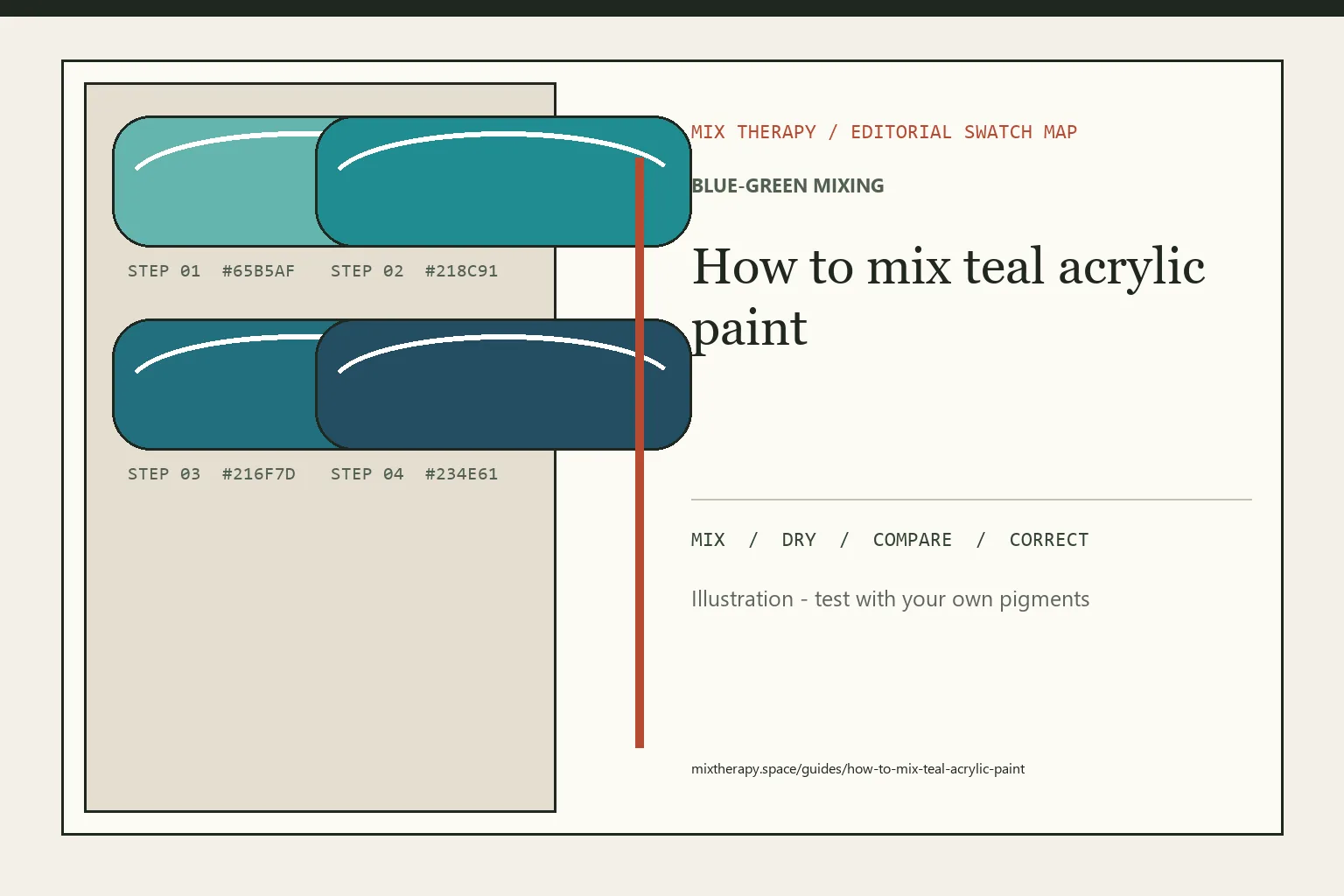
Start here
The short answer
Combine phthalo blue with a smaller amount of green or yellow to make a blue-green concentrate. Pull that concentrate into a separate pile for value changes. Add white for lighter teal and a trace of burnt sienna or warm red to mute it. Keep the mixture blue-dominant so it does not drift into emerald green.
Teal map
Separate hue, value and chroma
One concentrate can produce several related blue-green families.
| Variation | Direction | Useful approach |
|---|---|---|
| Deep teal | Dark blue-green | Concentrate plus chromatic dark. |
| Muted teal | Lower chroma | Trace of burnt sienna. |
| Light teal | Higher value | Concentrate pulled into white. |
| Turquoise | Lighter and greener | More green/yellow, then white. |
Phthalo pigments are highly staining and strong. Measure them with a small knife tip rather than estimating from a large squeeze.
01
Place the target within the blue-green range
Decide whether the target is closer to navy, green, turquoise or gray. Teal usually remains blue-dominant, while turquoise is often lighter and may lean greener. Naming the direction before mixing prevents repeated swings across the center.
Compare value separately. A dark teal can look less saturated simply because it is dark; adding extra green may change the hue without making the mixture look cleaner.
02
Build a small blue-green concentrate
Start with phthalo blue green shade when available and add a smaller amount of phthalo green, or introduce a clean yellow gradually. Ultramarine can make a softer, more violet-biased teal, useful when a less synthetic result is wanted.
Mix only a small concentrate. Strong pigments spread through white and mediums rapidly, so a concentrated source lets you dose multiple branches without wasting paint. Record knife-tip proportions even if the numbers are approximate.
03
Control value through a separate white pile
Place titanium white in a clean area and pull the concentrate into it a little at a time. This is more controllable than adding a large amount of white to the concentrate. It also preserves a dark source for shadows.
White can expose a shift toward green that was hidden in the mass tone. If that happens, correct the concentrate with blue before making more light teal rather than adjusting each tint independently.
04
Mute teal with its warm opposition
Burnt sienna, red oxide or a restrained warm red can reduce teal’s chroma. Pre-mix a small warm neutralizer and add it in stages. Directly combining two strong complements can jump from vivid teal to brown before an intermediate neutral is seen.
For coastal or weathered teal, yellow ochre may warm and soften the mixture at the same time. Keep checking a thin drawdown so the blue-green identity remains present.
05
Create depth without using black alone
A deep teal needs low value and a readable undertone. Mix a chromatic dark from blue and burnt sienna, then bias it back toward the teal concentrate. This connects the darkest passages to both the local color and the rest of the palette.
Test the final family on the intended ground. Transparent teal over white can glow, while the same mixture over a dark ground may appear nearly black. Opacity, film thickness and varnish affect the result.
Troubleshooting
Correct common teal shifts
Return to the concentrate instead of changing every branch separately.
| Symptom | Direction needed | Correction |
|---|---|---|
| Looks emerald green | Bluer | Add blue to the concentrate in a measured amount. |
| Looks like plain blue | Greener | Add green or clean yellow gradually. |
| Looks neon | Lower chroma | Use a trace of burnt sienna or warm red. |
| Light teal looks chalky | More chroma | Add concentrate, then reassess value after drying. |
Free studio printables
Record the test instead of guessing again.
Use the worksheet beside the palette, then keep the dry result with the painting notes. Each PDF is free, low-ink and formatted for US Letter paper.
See both printables and the full methodStudio questions
Questions painters ask
What colors make teal acrylic paint?
Blue plus a smaller amount of green or yellow makes teal. Phthalo blue and phthalo green create a strong clean teal; ultramarine produces a softer version.
How is teal different from turquoise?
Teal is generally darker and more blue-dominant. Turquoise is often lighter, brighter and may lean farther toward green.
How do I make teal less bright?
Add a very small amount of a warm complement such as burnt sienna. Mix completely and stop before the blue-green hue disappears.