
Light neutral colors
How to mix beige and cream acrylic paint
Beige and cream are high-value, low-chroma warm colors. Their apparent simplicity makes them unforgiving: a strong pigment addition can shift a large white pile too far, and surrounding colors can make the same neutral look pink, green or gray.
Start here
The short answer
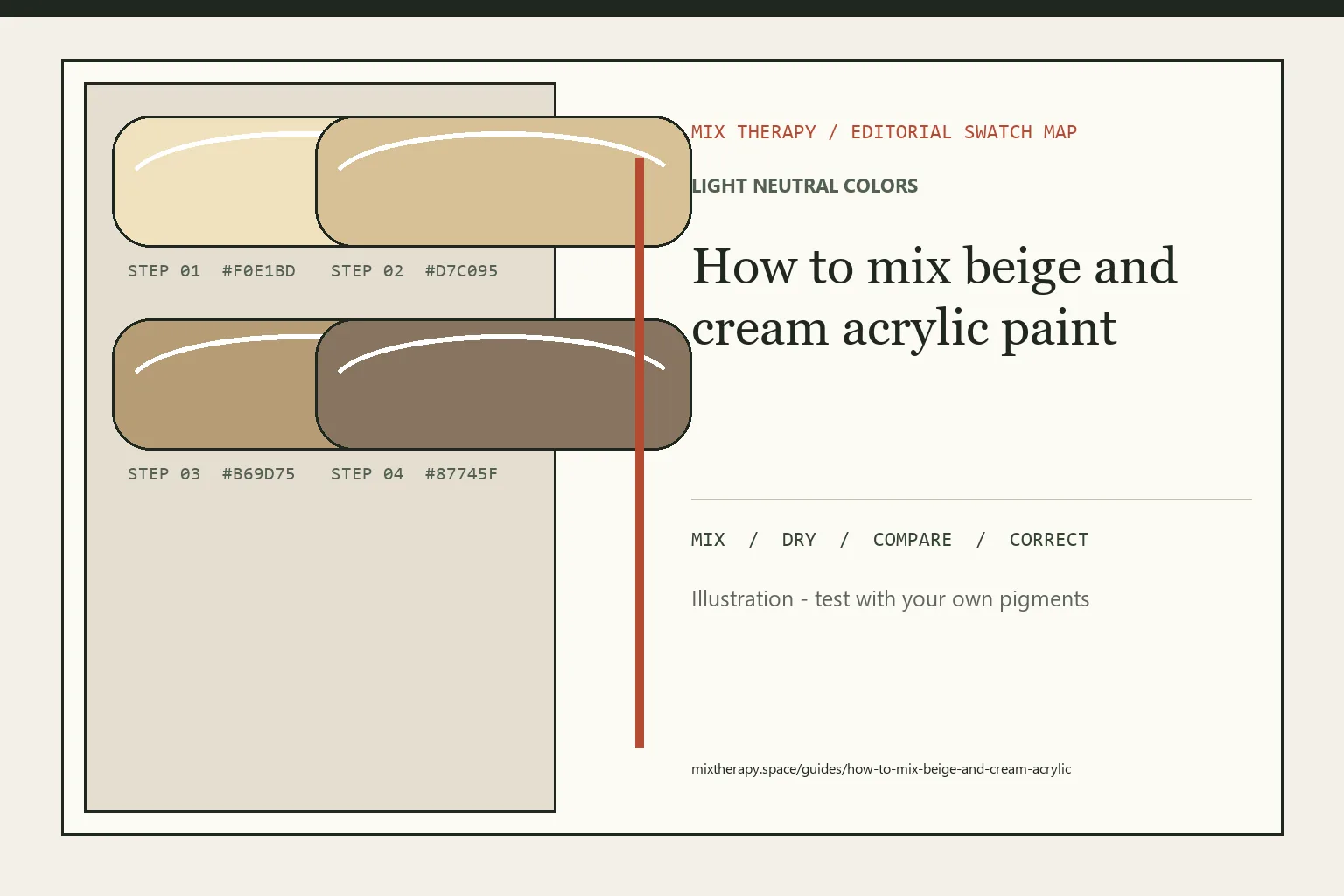
Begin with titanium white and tint it with a small premixed warm concentrate made from yellow ochre and burnt sienna. For cream, keep the result lighter and more yellow. For beige, add slightly more earth color and a trace of blue only if the mixture is too orange. Compare the dry swatch in context before correcting.
Light-neutral map
Dose color into white, not white into color
A tiny concentrate gives better control over a large high-value mixture.
| Neutral | Character | Starting direction |
|---|---|---|
| Cream | Light, warm yellow | White plus yellow ochre. |
| Beige | Warm muted tan | White plus ochre and sienna. |
| Greige | Cooler gray-beige | Beige plus restrained blue-gray. |
| Sand | Deeper yellow-beige | Ochre, sienna and less white. |
Mix the concentrate first so red and yellow are fully combined before they enter the white pile.
01
Describe the undertone before mixing
Place the target beside neutral white and ask whether it leans yellow, peach, pink, green or gray. Beige is a category rather than one exact hue. Architectural light, reflected floor color and camera white balance can all change the apparent undertone.
Start with a mid-light area rather than a specular highlight or deep shadow. If matching from a photograph, sample a small averaged region and keep the surrounding colors visible while judging.
02
Make a controlled warm concentrate
Combine yellow ochre and burnt sienna into a warm tan concentrate. Yellow ochre controls the golden direction; burnt sienna adds red-orange depth. A mixture based only on bright yellow and red can work, but its high tinting strength makes small neutral shifts harder.
Test the concentrate with a touch of white to preview its undertone. Adjust it before introducing it into the main white pile. This prevents multiple strong pigments from being corrected independently inside a large batch.
03
Pull the concentrate into white gradually
Set out more titanium white than the expected final volume and move tiny amounts of concentrate into it. Mix completely after each addition. High-value colors are sensitive to streaks, and an unmixed knife mark can look like a hue error.
Stop slightly lighter than a wet comparison suggests and make a dry test. Acrylic may deepen as it dries, and the shift is more noticeable when a subtle cream must match an existing wall or painted passage.
04
Neutralize only when the warmth is excessive
If beige looks orange, add a tiny amount of a blue-gray made separately from blue and a warm earth. Avoid dropping full-strength blue directly into the white pile. The target is a controlled warm neutral, not a colorless gray.
If it turns greenish or lifeless, restore the warm concentrate in a fresh branch. Repeatedly alternating orange and blue in the same pile increases pigment complexity and can destroy clarity.
05
Judge the dry neutral in context
Light neutrals change appearance dramatically beside saturated color. Test the swatch against the actual neighboring wall, fabric, skin tone or background. A mixture that looks peach on white may read correctly beside a cool blue.
Record the recipe as white plus a measured concentrate, not as a long list of tiny individual additions. This makes scaling easier and preserves the undertone when a larger batch is needed.
Troubleshooting
Correct a light neutral cleanly
Pre-mix modifiers near the target value whenever possible.
| Symptom | Direction needed | Correction |
|---|---|---|
| Looks yellow | Redder or more neutral | Add sienna concentrate, then reassess. |
| Looks peach | Less red-orange | Add yellow-white or a trace of blue-gray. |
| Looks gray and dead | More warm chroma | Restore warm concentrate in a clean branch. |
| Dries too dark | Higher starting value | Reserve more white and repeat the dry test. |
Free studio printables
Record the test instead of guessing again.
Use the worksheet beside the palette, then keep the dry result with the painting notes. Each PDF is free, low-ink and formatted for US Letter paper.
See both printables and the full methodStudio questions
Questions painters ask
What colors make beige acrylic paint?
Titanium white tinted with yellow ochre and burnt sienna makes a practical beige. A trace of blue can neutralize excess orange.
What is the difference between beige and cream?
Cream is usually lighter and more yellow, while beige is slightly deeper and more neutral or brown.
How can I make beige without brown paint?
Mix a restrained orange from yellow and red, neutralize it with a tiny amount of blue, then pull that concentrate into white.