
Dry-swatch calibration
Why acrylic paint dries darker—and how to correct it
Wet acrylic contains water and acrylic medium that scatter light. As the film cures, that scattering changes and the mixture can appear darker, clearer or slightly less saturated. The amount varies by pigment, medium, brand, surface and lighting.
Start here
The short answer
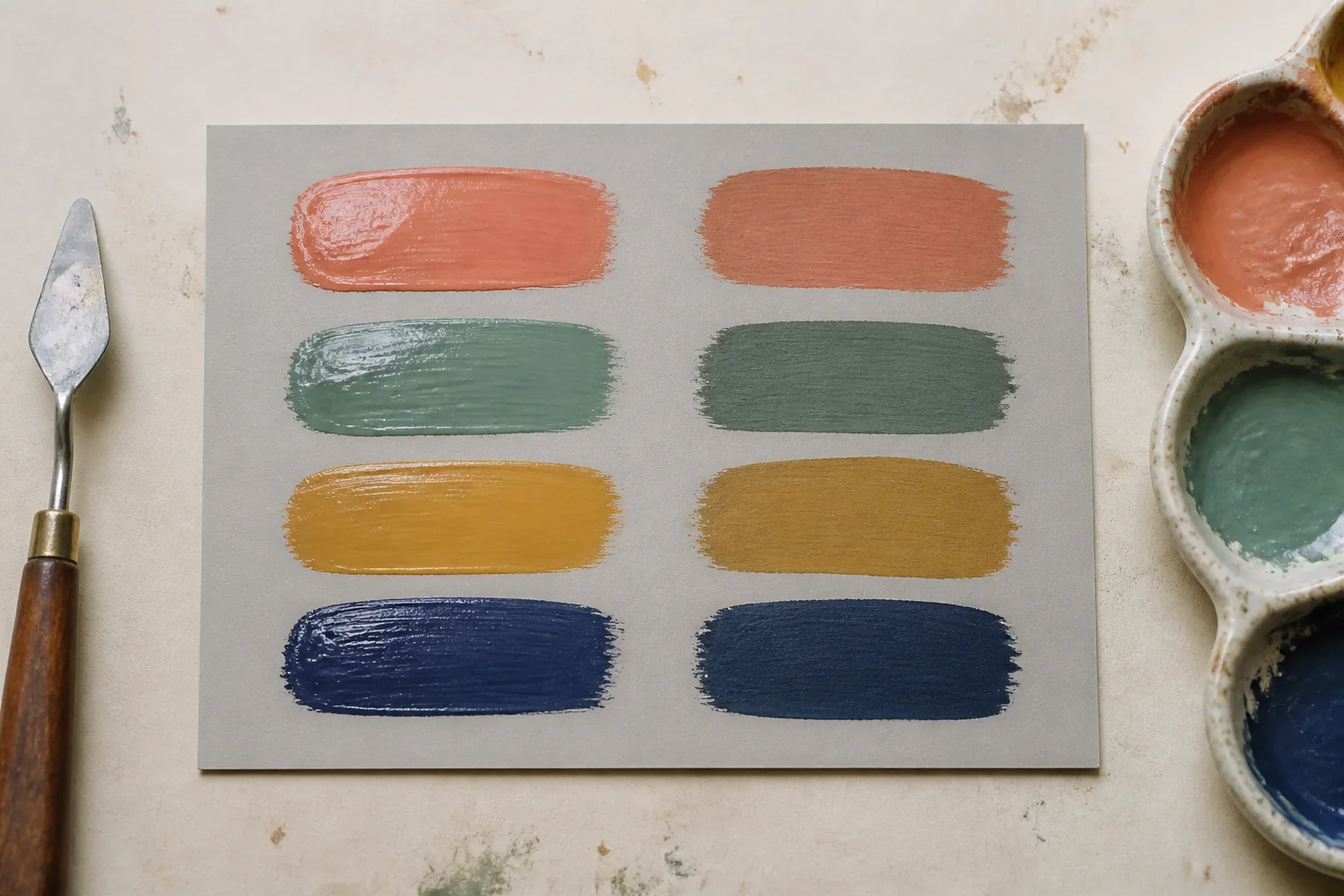
Many acrylic mixtures appear darker as they dry because the wet binder scatters light and then becomes clearer while the film cures. The change is not a fixed percentage and it does not affect every color equally. The reliable solution is to make labeled wet-and-dry swatches using the same paint, thickness, surface and lighting as the artwork.
Calibration setup
Make one comparison you can trust
Control the variables before deciding that a pigment or recipe has shifted.
| Variable | Keep it consistent | Why it matters |
|---|---|---|
| Surface | Same primer and ground | Absorbency and ground color change apparent value. |
| Film | Same tool and thickness | A thin wash and an opaque stroke do not dry alike. |
| Light | Same neutral source | Warm, cool and glossy reflections distort comparison. |
| Time | Label wet, touch-dry and cured | A touch-dry surface may still be changing. |
For an important color, keep the dry reference beside the recipe. Memory is a poor measuring instrument for subtle value shifts.
01
What changes inside a drying acrylic film
Wet acrylic paint contains pigment suspended in water and acrylic polymer. While the film is wet, water and the milky-looking binder scatter light between pigment particles. As water evaporates, the polymer particles move together and the binder becomes clearer. Less scattered light can make the pigment mass appear deeper or darker.
That explanation describes a common pattern, not a universal rule. Transparent pigments, opaque pigments, matte mediums, gloss mediums and different brands form different films. A color may darken noticeably, shift only slightly or seem to change saturation more than value. Treat claims such as “acrylic always dries ten percent darker” as unreliable shortcuts.
02
Separate dry shift from gloss and surroundings
A glossy surface can look darker when it reflects a dark room and lighter when it catches a bright lamp. Tilt the swatch until the reflection moves away, then compare it with a matte neutral reference. Also check the background: the same gray looks lighter beside black and darker beside white because the eye judges relationships.
Photographs introduce another layer of uncertainty. Auto exposure, white balance, HDR and display brightness can exaggerate or conceal the real difference. Use photographs for documentation only after the physical comparison has been made under controlled light.
03
Build a wet-and-dry calibration strip
Prepare a strip of the actual painting ground and divide it into labeled spaces. Mix enough paint for all tests, then apply one stroke at the intended thickness. Keep a fresh portion on the palette or make a second adjacent stroke later so wet and dry versions can be seen together.
Write down the pigment names or color-index codes, brand, medium and approximate parts. Note the time of application and evaluate once at touch-dry and again after the film has had longer to settle. Thick applications and retarding mediums need more time than thin unmodified paint.
- Use the same brush or palette knife for each comparison.
- Do not speed the reference swatch with a hair dryer.
- Keep the test away from direct sun while it dries.
04
Correct the next batch without making it chalky
If a mixture repeatedly dries too dark, do not automatically add a large amount of titanium white to the finished pile. White raises value but can also reduce chroma and alter opacity. Instead, reserve a lighter version of the base mixture and add strong pigments into it more cautiously.
When the dry color is too vivid, neutralize before making the final value adjustment. When it is too gray, rebuild with a clean portion of the dominant hue. Make a fresh swatch after every meaningful change; judging a wet correction against a dry target repeats the original error.
05
Turn repeated observations into a studio profile
A small set of calibration strips quickly reveals which mixtures in your own paint box shift most. Group them by palette and brand rather than assuming one rule applies to every tube. Include mixtures you use often: light neutrals, skin halftones, dark blue-greens and high-chroma accents.
Record the dry result alongside the recipe in Mix Therapy or a physical notebook. Over time, correction notes such as “reserve more light base” or “judge only after matte varnish” become more valuable than a generic percentage because they describe your materials and working conditions.
Troubleshooting
When the comparison still looks inconsistent
Most confusing results come from an uncontrolled surface, film or light source rather than from a mysterious pigment reaction.
| Symptom | Check first | Better test |
|---|---|---|
| Dry swatch looks different at every angle | Gloss reflection | Tilt it under broad neutral light or compare after a consistent finish. |
| Thin test matches, thick passage does not | Film thickness | Repeat the swatch at the application thickness used in the painting. |
| Photo and physical swatch disagree | Camera processing or display | Use the physical swatch as the authority. |
| Color keeps changing after touch-dry | Film is not fully settled | Wait longer, especially with thick paint or retarder. |
Free studio printables
Record the test instead of guessing again.
Use the worksheet beside the palette, then keep the dry result with the painting notes. Each PDF is free, low-ink and formatted for US Letter paper.
See both printables and the full methodStudio questions
Questions painters ask
Does every acrylic color dry darker?
No. The direction and size of the shift depend on the pigment, binder, medium, thickness and surface. That is why a personal swatch record is more reliable than a fixed percentage.
Can a hair dryer speed up the test?
It can change how the surface forms and may not represent normal curing. A naturally dried test is the safer reference for an important mixture.