
Earthy green recipe
How to mix avocado green acrylic paint with recipes
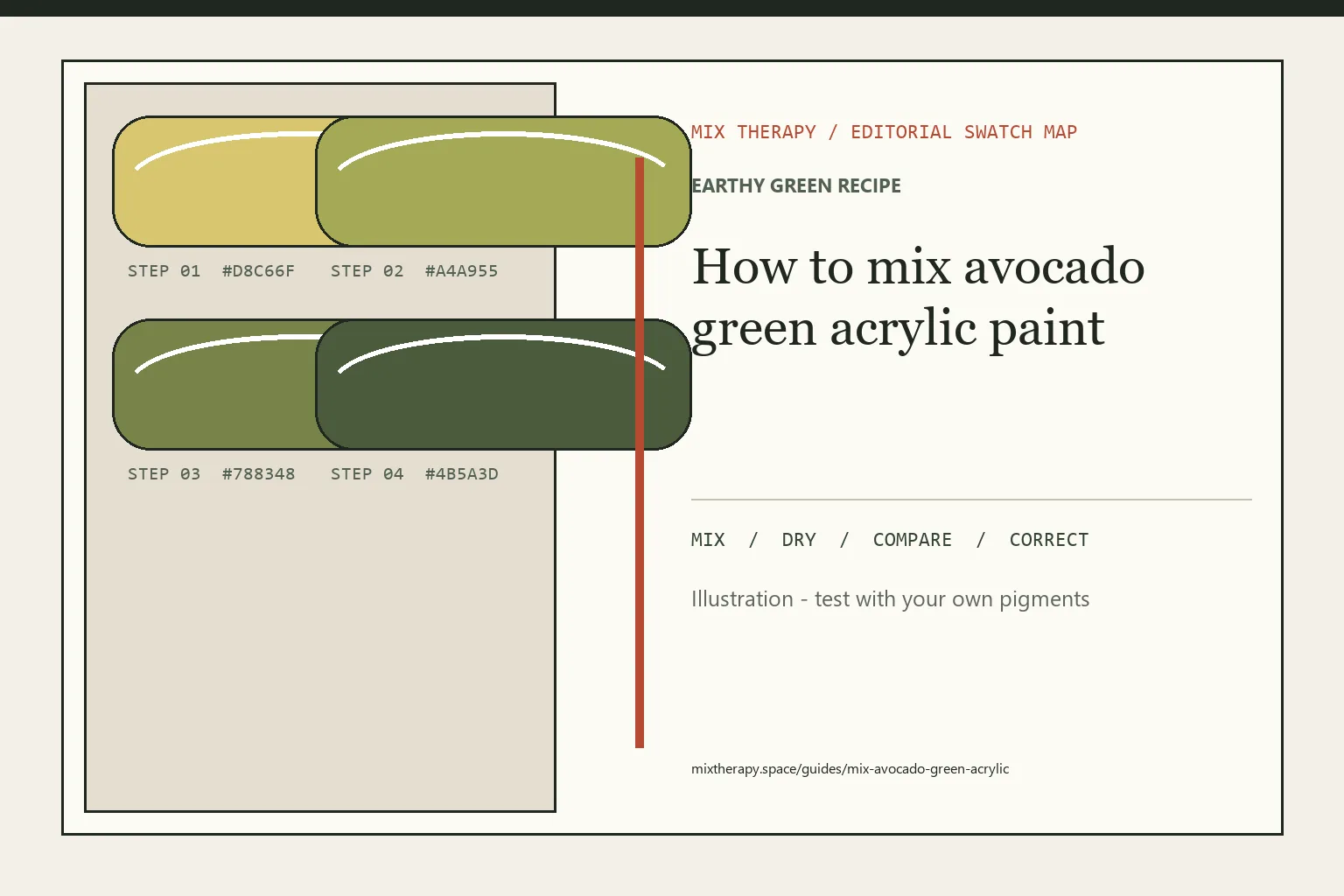
Avocado green is a warm, muted yellow-green. It needs enough blue to read as green, but its dominant impression comes from yellow and earth pigments rather than a cool blue-green base.
01
Place avocado between yellow-green and olive
Avocado green usually carries more yellow and light than olive, but more earth and restraint than a bright spring green. Compare the target to a neutral gray, then decide whether it needs a yellow lead, a blue lead, or a browner undertone. This keeps the first mix specific to the passage rather than a generic green.
Use a small local sample from the reference. Foliage and interior paint can shift dramatically under warm or cool light, so a broad color name is less useful than an observed value and temperature.
02
Build a yellow-heavy parent mixture
Mix yellow with ultramarine or another blue a little at a time until it reads as green. Keep the yellow as the visible leader. Make the first parent pile slightly cleaner than the final target so you have room to add earth without losing the hue immediately.
A clean palette knife matters here. Residual red or gray from another pile can neutralize the small blue addition before you see the green structure. Reserve some of the parent mixture before changing value or saturation.
03
Warm and mute with earth colors
Yellow ochre adds warmth and opacity, while burnt umber can lower chroma and deepen the mixture. Add one earth at a time so you can tell whether it changed hue, value, or both. A trace is often enough; large earth additions can move avocado into olive or brown-green.
If the color looks too blue, correct it with yellow before adding more white. If it looks too vivid but has the right value, use a controlled touch of the complementary red or an earth already in the painting. Black is rarely the clearest first correction.
04
Mix foliage planes as a family
Make a lighter avocado with white and a little yellow, then make a separate shadow with ultramarine and burnt umber. The shadow can be darker and cooler without becoming a dead green-black. Use the parent pile in both branches so they remain visibly related.
Test the family beside neighboring warm colors. A green that looks dull alone may be exactly right beside a red roof or terracotta pot. A green that looks bright alone can still need more muting when it competes with the focal area.
05
Dry-check the intended surface
Brush thin tests on the real ground and wait for them to dry. Matte paper, white gesso, and a colored underpainting each change the apparent warmth. Check the swatches under the same light as the painting, then make one small correction to the best version rather than revising every pile.
For a softer gray-green, compare the sage guide. For a deeper, browner branch, compare the olive green guide. Keep notes on the yellow, blue, and earth route so a useful avocado can be remixed later without guessing.
Free studio printables
Record the test instead of guessing again.
Use the worksheet beside the palette, then keep the dry result with the painting notes. Each PDF is free, low-ink and formatted for US Letter paper.
See both printables and the full methodAt the easel
Compare it in the painting
When avocado green is part of an interior or landscape, compare it with the warm neutrals nearby before finalizing it. A slightly dull green can look rich beside terracotta, cream, or muted red. A cleaner green may be needed only when the painting requires a focal accent. This keeps the color decision tied to the composition rather than a color name. Check the shadow separately, since a single darkened pile often makes both foliage and interior surfaces look flatter than the observed form. Keep the dry test sheet beside the palette while working, then use its light, middle, and dark marks as a reminder of the value plan when the wet paint becomes hard to judge.
Small studio study
Test the color in context
In a foliage study, make a cluster of overlapping marks with the light mixture on the upper planes, the parent mixture in the middle, and the cooler dark tucked into the overlaps. Do not blend every boundary. Small broken edges let the shared pigments show while keeping the foliage from becoming a single flat green area. For an interior wall, use the same three piles in broader shapes and compare them with nearby trim. The value pattern should remain clear even when the green is deliberately muted.
Before the final pass
Make one last comparison
If the avocado mixture will repeat across several objects, mix a modest reserve before changing the shadow pile. This avoids remaking the parent color from memory. Cover the reserve to slow drying, then make later adjustments in smaller side piles.
Studio questions
Questions painters ask
How is avocado green different from olive green?
Avocado is usually lighter and more yellow. Olive tends to be deeper, browner and more neutral.
What fixes an avocado green that is too blue?
Add yellow first, then a small amount of yellow ochre if it also needs warmth and muting.